
06/08/2026
Gary Mason
First direct entry superintendent to reach NPCC ranks announces retirement after 10 years' service.
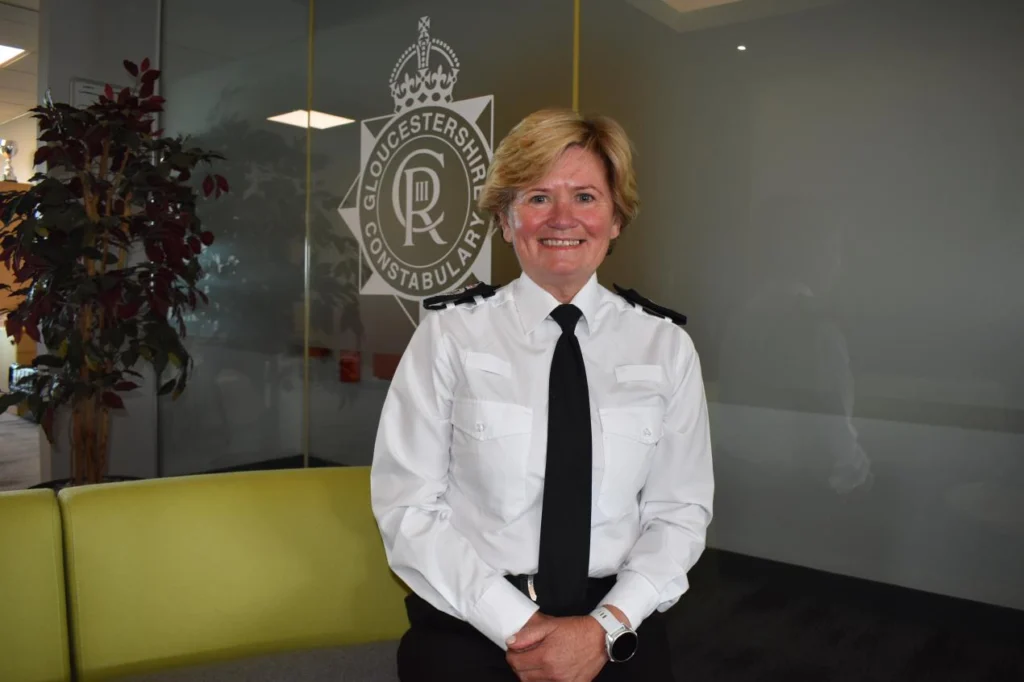
Gloucestershire Constabulary’s Temporary Chief Constable (TCC), Maggie Blyth, is to retire from policing after 10 years as an officer.
T/CC Blyth joined the Constabulary in October 2024 on secondment from the College of Policing following the suspension of the then Chief Constable, Rod Hansen.
Last month, when Mr Hansen’s contract ended and he retired, Police and Crime Commissioner Chris Nelson announced his intention to run a recruitment process to appoint a permanent Chief Constable.
T/CC Blyth’s contract is due to end in December, and she let the Commissioner know that she will remain in post until the process to appoint Gloucestershire’s 18th Chief Constable is concluded.
“After much consideration and reflection, I have decided to retire from policing,” Maggie said. “In light of my decision, I won’t be putting my name forward for the selection process for a permanent Chief Constable. After 36 years of public service, it is time to prepare the way for my successor.
“It has been – and continues to be – a privilege and an honour to be Temporary Chief Constable and to lead such committed, professional and dedicated police officers, staff and volunteers helping to keep people in Gloucestershire safe from harm.
Before joining Gloucestershire, Maggie was Deputy Chief Constable at the College of Policing, and for three years was the national chief officer lead for policing on Violence against Women and Girls (VAWG) and Chair of the national Violence and Public Protection Board.
She joined policing in 2016 as a Superintendent and District Commander for Portsmouth City, Hampshire. After completing the National Police Strategic Command Course in 2019, she held the role of Assistant Chief Constable for Local Policing which included oversight of public protection services across Wiltshire, Hampshire and the Isle of Wight.
When she joined Gloucestershire, she became the first ‘Direct Entry’ Superintendent to reach the rank of Chief Constable.
Maggie said: “I’m proud of the progress made in addressing a number of issues in Gloucestershire. This is no longer a Force that is struggling but one that has strong foundations in place to move forward with clear direction and confidence.
“There is still much to do though, so it is very much business as usual over the next few months. My focus remains on our immediate priorities – delivering services to our communities, responding to our HMICFRS PEEL report, and preparing for Police Reform and the future direction for policing. We will also need to respond to the Government’s budget in October in line with our own financial, performance and strategic planning requirements. I remain committed to serving the people of Gloucestershire as I prepare to hand over to the next Chief Constable.”
She worked in the Probation Service in 1990 in Oxfordshire, going on to specialise in youth justice, and setting up the first County Youth Offending Service in 1998 in Oxford. She then became a national lead on youth justice for the then new Youth Justice Board for England and Wales before spending a decade in child protection services and then joining policing.
PCC Chris Nelson praised Maggie for her commitment, drive and energy in dealing with some challenging issues within the Force.
He said: “I am hugely grateful to Maggie for joining the Constabulary in its time of need. At short notice, in difficult circumstances, she grasped the opportunity to lead the Force when so much needed to change. She immediately had to tackle some severe financial problems and make many tough decisions to balance the books.
“Together, she and her Deputy, Katy Barrow-Grint, make a formidable team and lead the Force with integrity and professionalism, addressing some deep-seated cultural problems. Maggie has also made significant improvements to how the Force manages its IT, handles public safeguarding issues and protects vulnerable children.
“The Constabulary is now more financially stable and on the long road to improving its overall performance. The Crime Survey of England and Wales places us second best nationally for public trust and confidence.
“Maggie can also be immensely proud of her leadership at the national level to tackle violence against women and girls, and her prominent role within the wider police reform agenda, including as a key participant in the much-needed recent Police Leadership Commission. Her national influence has helped gain professional and financial support for the Constabulary, helping to speed its progress towards improved performance.
“As Maggie prepares to retire after her long and distinguished career as the most successful direct entrant into policing, I would like to place on record my thanks for her 36 years of public service and her integrity, selfless commitment, dedication and hard work.”
The recruitment process for a permanent Chief Constable will start in the next few weeks. The Police and Crime Commissioner will be asking the Chair of the Police and Crime Panel if the November meeting of the panel can be used to confirm the successful candidate.